

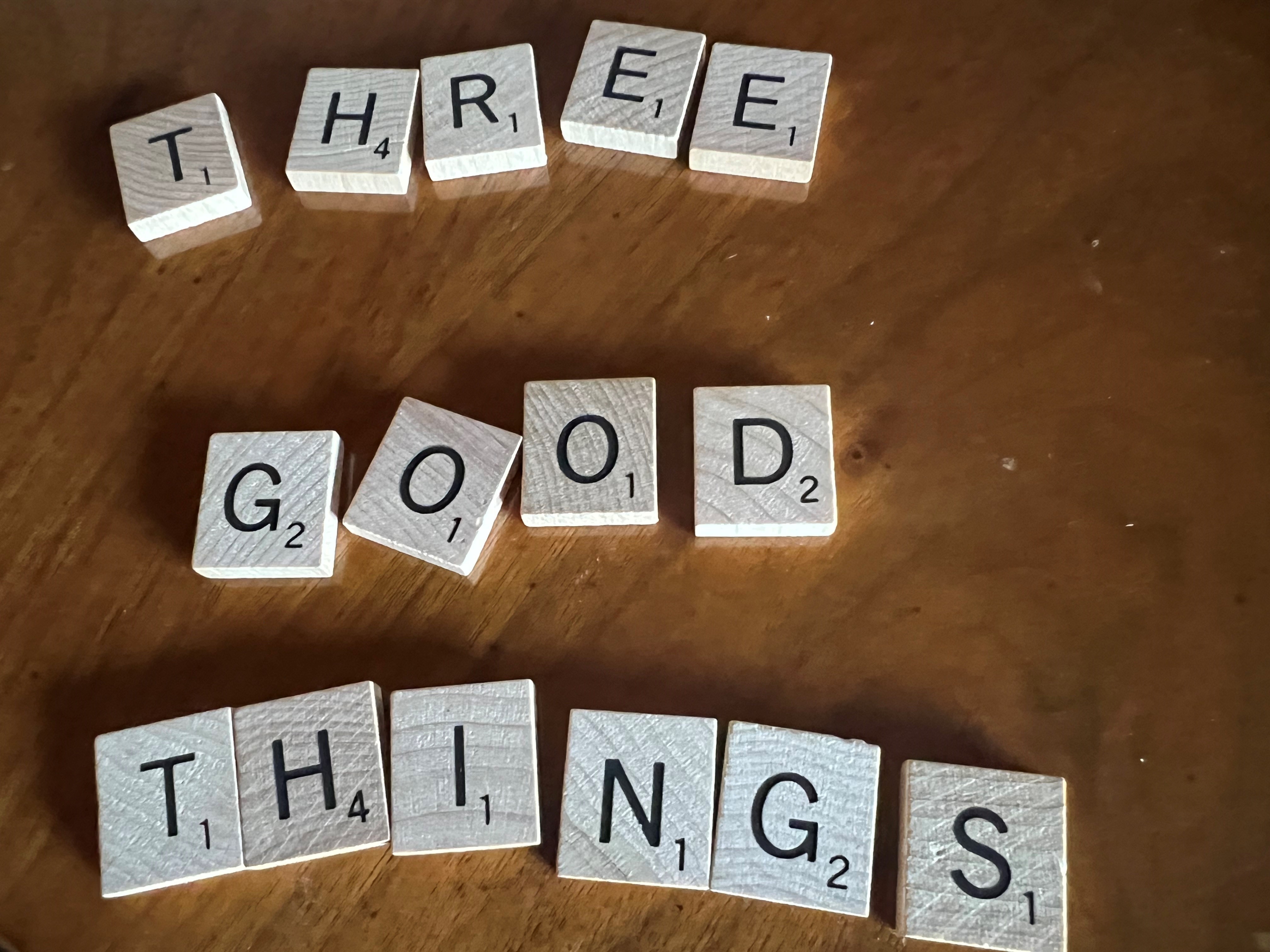
In my cynical and obstinate heart, when someone like Martin Seligman (or John Sommers-Flanagan) tells me I should think about three good things, I immediately start thinking about three bad things. I like to imagine my own brand of oppositionality as normal or natural . . . but I also recognize there is, and always has been, a twisted and angry part of me unwilling to believe that someone else has anything to offer me on how to live my life. [Note: I know the twisted and angry part of me is NOT the best part of me, but it’s in there nonetheless, and as the Jungians might say, denying and suppressing parts of ourselves usually comes back to bite us in the ass.] [Note: the Jungians don’t actually say anything about getting bitten in the ass; that’s just my blue-collar background translation of what the high-falutin Jungians really mean.]
Ironically, for the first four weeks of the Montana Happiness Challenge, we’ve been prodding and pummeling people with “activities” (a nice word for homework) involving happy songs, witnessing inspiration, happy places, and this week, three good things. If you’re like me, I owe you an apology—I’m sorry about all this damn positivity—especially in the face of a world filled with oppression, war, mass shootings, and destructive politics.
The point and purpose of our positive psychology assignments is not to imply that you shouldn’t bitch about bad things in your life or scary things in the world. Please do that. You should. There’s plenty to bitch about. I’d get into my own bitching right now, but the main point of the Montana Happiness Challenge is to encourage people (including cranky old me) to intentionally create space and time for positive thoughts.
The idea that we should focus more on the positive is neither rocket science nor news flash. The bummer of reality includes the fact that most humans find it easier and more natural to bitch about the bad things than remind themselves of the good things. Remembering that there’s something (or anything) positive in the world or in our lives is hard work.
Feel free to bitch about that too.
If you’re doing the three good things activity, you may find yourself tempted to list your 17 most recent bad things. That might be the unique twisted and angry part of you pushing back on this silly and not so silly assignment. If so, the twisted and angry part of me would just like to say, either, “Welcome to my world” or “Come on, get your shit together, do the effing assignment, and even though it feels like bragging, post it on social media for all the world to see.”
Have a great day, and be sure to bitch and moan as you please.#MHPHappinessChallenge #MontanaHappiness
 John Sommers-Flanagan