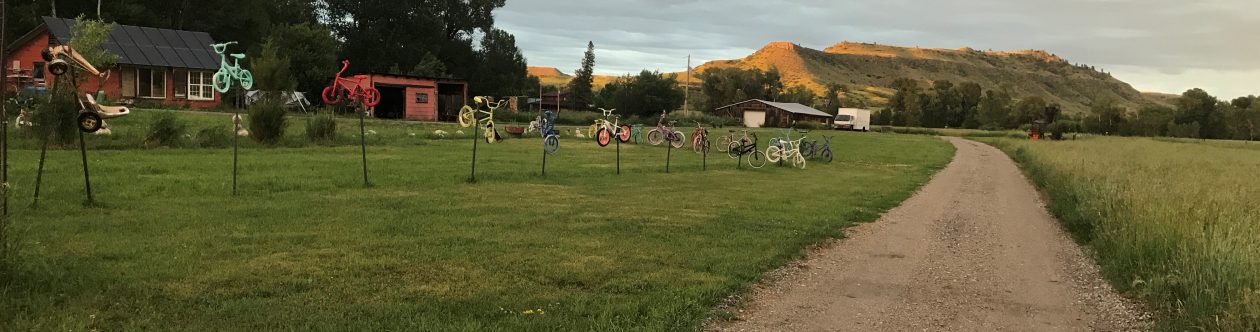

Thanks to BEN ALLAN SMITH of the Missoulian for this fantastic photo!
Now that the University of Montana Grizzly football team won today, and will be going to the FCS Championship game, we can all relax. Of course, I’m joking, but I know some fans (not necessarily me) have lots of trouble relaxing while their favorite team is playing, and many of them (not necessarily me) will be out celebrating, and not at home relaxing. Of course, all that cheering and jeering and beering may not be optimal for our health, but I want to emphasize that just because this week’s happiness challenge activity is “Your favorite relaxation method,” I’m not suggesting that anyone should relax (other than the kickers) when you’re in (or cheering) a double overtime semi-final game.
That said, I hope, at some point during this weekend, everyone takes time to explore and experiment with their favorite relaxation method. As I’ve already noted on social media, relaxation is a viable and evidence-based intervention for several different problems and mental disorders. Indeed, learning relaxation skills—so you can use them when you want to use them—is a very good deal.
In 1975, Herbert Benson of Harvard University published a book titled, The Relaxation Response. Benson wrote that for humans to achieve the relaxation response, they need four components:
- A quiet place.
- A comfortable position.
- A mental device.
- A passive attitude.
Benson’s research was pretty phenomenal. When people were able to create a state of relaxation within themselves, they experienced physiological and psychological benefits similar to (but not quite as good as) the benefits of sleep. For this reason, I sometimes refer to the relaxation response as “almost sleep” and recommend it as an in-bed goal for those of us who suffer from insomnia.
The relaxation response involves slowing your respiration and heart rate, with a concomitant reduction of blood pressure. People can achieve the relaxation response via different pathways. . . including, but not limited to methods like deep breathing, visualization, meditation, and self-hypnosis.
For this assignment, your job is to identify and practice your favorite pathway for reducing your heart rated and breathing (aka your relaxation method). The good news is that you don’t really need a quiet place and a comfortable position (although they help, they’re not essential). But you do need a mental device and a passive attitude.
Unfortunately, as it turns out, for some people, the act of trying to relax creates anxiety. This is a puzzling paradox. Why would trying to relax trigger anxiety?
The intent to relax can trigger anxiety in several different ways. For some, if you try to relax, you can also trigger worries about not being able to relax. This is a relatively natural byproduct of self-consciousness. If this is the case for you, take it slowly. Self-awareness can trigger self-consciousness and self-consciousness can trigger anxiety . . . but time and practice can overcome these obstacles.
For others, a history of trauma or physical discomfort can be activated. This is similar to self-consciousness because the turning of your attention to your body inevitably makes you more aware of your body and this awareness can draw you into old, emotionally or physically painful memories. If this is the case for you, again, take it slowly. Also, manage your expectations, and get support as needed. Support could come in the form of specific comforting and soothing cues (even physical cues), an outside support person, or a professional counselor or psychotherapist.
Trauma and anxiety are common human challenges. Although trauma and anxiety can be terribly emotionally disturbing and disruptive, the core treatment for these problems usually involves one or more forms of exposure and can be traced back to Mary Cover Jones. You can read more about Mary Cover Jones and her amazing work on my blog: https://johnsommersflanagan.com/2018/06/04/the-secret-self-regulation-cure-seriously-this-time/
Okay, that’s enough of my jibber-jabbering. Here’s the activity:
- Try integrating your favorite relaxation method (no drugs please) into your daily life. You can do it for a minute here and there, or 20 minutes all at once.
- Experiment! Try different methods for helping your body achieve a relaxed state.
- If you feel inspired, share about your relaxation experiences here, or on social media, or with your friends and family,
I hope you all become fantastic at relaxing . . . at least until the Grizzlies face South Dakota State for the national championship on January 7.


 John Sommers-Flanagan