
Parenting books are ubiquitous; they vary greatly by population (e.g., teens, toddlers, LGBTQ+, culture), problem (e.g., ADHD, autism, sleep, etc.) and approach. This is a field where nearly everyone has very strong (and often opposing) opinions and feelings and very much believe THEY ARE RIGHT. Think of Tiger Parenting vs. Free Range Parenting and the fights that might start between adherents to those approaches. You’ll notice I don’t include books on Tiger or Free Range parenting (which may or may not be a statement), but I do capture some of the extremes and nuances of the different approaches to helping babies and children sleep.
I’m not necessarily advocating the books on this list. In fact, I think some of them are pretty silly. For those of you who know me, you know that I dislike hype, and I dislike it when authors write and act like they’re the ones who have suddenly developed a new and revolutionary paradigm shift. Many contemporary parenting book authors are de-emphasizing compliance and behavioral control, and focusing instead on the underlying neurological states that are contributing to disruptive or undesirable behaviors. Although I don’t dispute the value of these approaches, they sound very Adlerian—other than the use of fancy pseudo-neuroscience terminology. They also sound like my mentor, Linda Braun, of Families First Boston, who always taught parents to “Get Curious, Not Furious.” Yes, I am now officially an old crank.
Many of these newer so-called “paradigm-shifting” approaches are very anti-behaviorism. That’s perfectly okay; after all, John Watson began the behavioral movement in parenting by advising parents not to hug or show too much affection to their children. His children suffered. Watson was a whack (and a genius); his form of behavioral parenting belongs only in the history books. On the other hand, parents need to pay attention to the repeating contingency patterns happening in their homes. Whether or not you buy into behaviorism, ignoring environmental contingencies happening in your home is a recipe for repeated parenting disasters. We need the knowledge of behavioral approaches, if only to make sure we’re not engaging in backward behavior modification. [for more on backward behavior modification, see: https://johnsommersflanagan.com/2012/12/02/backward-behavior-modification/ or https://johnsommersflanagan.com/2018/02/02/doing-behavior-modification-right/]
Many years ago, Sigmund Freud said something like, “There are many ways and means of conducting psychotherapy, all that lead to recovery are good.” The same might be said about parenting books. There are—truly—many ways and means of parenting. As you explore this field, you may want to focus your search on your particular interest. There’s great (and not so great) stuff out there on LGBTQ+ parenting, Indigenous parenting, and many other foci. You may want to find curated lists (like mine). For example,Maryam Abdullah and Megan Bander’s (of Berkeley’s Greater Good Magazine) favorite parenting books of 2023, see: https://greatergood.berkeley.edu/article/item/our_favorite_parenting_books_of_2023
My own list, which I’m sharing with my parenting consultation workshop participants is below.
Bryson, T. P., & Siegel, D. J. (2015). No-drama discipline: The whole-brain way to calm the chaos and nurture your child’s developing mind. Bantam.
Chiaramonte, N., & Chiaramonte, K. J. (2024). Embracing queer family: Learning to live authentically in our families and communities. Broadleaf Books.
Clarke-Fields, H. (2020). Raising good humans: A mindful guide to breaking the cycle of reactive parenting and raising kind, confident kids. New Harbinger.
Delahooke, M. (2019). Beyond behaviors: Using brain science and compassion to understand and solve children’s behavioral challenges. PESI Publishing.
Eriksen, T. (2022). Unconditional: A guide to loving and supporting your LGBTQ child. Mango.
Healy, G. (2023). Regulation and co-regulation: Accessible neuroscience and connection strategies that bring calm into the classroom. National Center for Youth Issues.
Lansford, J. E., Rothenberg, W. A., & Bornstein, M. H. (2021). Parenting across cultures from childhood to adolescence development in nine countries. Routledge.
Tyler, S., & Makokis, L. (2021). Ohpikinâwasowin/Growing a child: Implementing Indigenous ways of knowing with indigenous families. Fernwood Publishing.
Weissbluth, M. (2022). Healthy sleep habits, happy child: A new step-by-step guide for a good night’s sleep (5th ed.). Ballantine Books.
West, K., & Kenen, J. (2020). The sleep lady’s good night, sleep tight: Gentle proven solutions to help your child sleep without leaving them to cry it out (rev. ed.). Hatchet
FYI: Below is an annotated list of older parenting classics.
Ackerman, M. (1998). Does Wednesday mean Mom’s house or Dad’s? Wiley.
This book is written by a nationally renowned expert on child custody evaluations. It includes broad coverage of how parents can co-parent in a manner that is less confusing and more healthy for children. One of the book’s strengths is a chapter on developing parenting and custodial schedules, which is a practical problem often plaguing parents who are divorced or divorcing.
Brazelton, T. B., & Sparrow, J. D. (2006). Touchpoints: Birth to 3 (2nd ed.). MA: Da Capo Press.
T. Berry Brazelton is one of the most renowned parenting experts in the world. His Touchpoints books (there is also a Touchpoints: 3–6 years) are packed with critical information about how to deal with parenting challenges. Although you may not agree with every recommendation in the book, it’s difficult to find a more comprehensive, balanced, and gentle approach to parenting. The book includes three main sections: Touchpoints of Development; Challenges to Development; and Allies in Development. The breadth and depth of these books are very impressive.
Cline, F., & Fay, J. (2006). Parenting with love and logic (rev. ed.). NavPress.
The love-and-logic model for parenting and teaching is extremely popular, particularly among educators. Cline and Fay are master storytellers and they bring home the lesson that parents need to give children increasing responsibility and stand by them (but not in for them) with empathy when they make mistakes or fail. The underlying premise of this model is that children learn best from their own mistakes and natural consequences and that we should all avoid being “helicopter” parents who rescue our children from real-world learning.
Coloroso, B. (2009). The bully, the bullied, and the bystander: From preschool to high school—How parents and teachers can help break the cycle (rev. ed.). Harper.
Barbara Coloroso is a popular parent educator from the Pacific Northwest. She has written several well-received books and this is her latest. It focuses on how parents and teachers can help children cope with bullying. Coloroso paints the bully, the bullied, and the bystander as “three characters in a tragic play.” Her focus on the bystander is especially important because of its consistency with research suggesting that the best bullying interventions focus not only on the bully and victim, but also on bystanders, parents, and teachers.
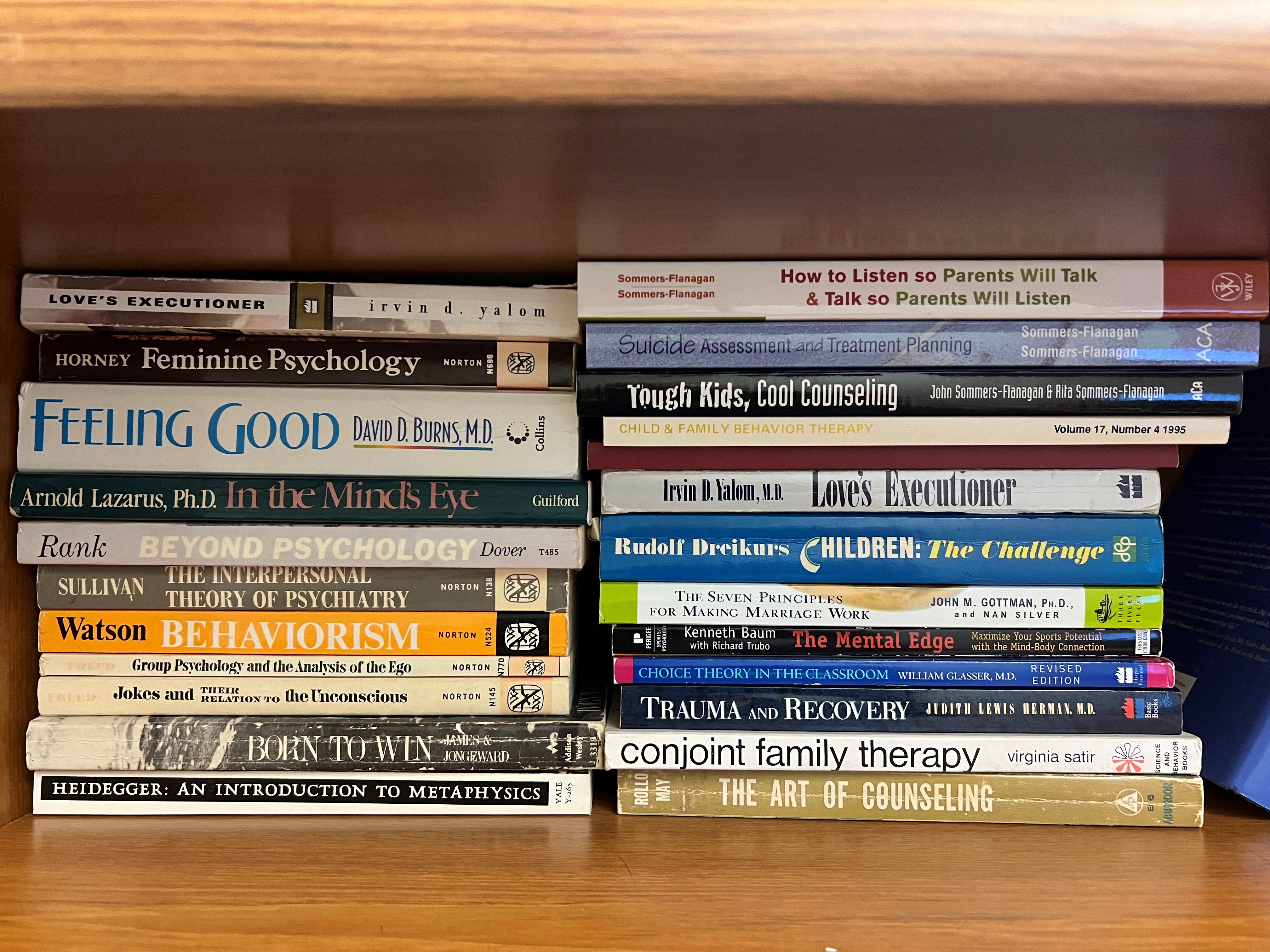
Dreikurs, R., & Soltz, V. (1991). Children: The challenge. Plume.
This is an early parenting classic, originally published in 1964. It’s based on Adlerian theory and emphasizes natural consequences and other methods through which parents can encourage, but not spoil, their children. The book provided foundational concepts for many parenting books that followed. For example, it discussed the goals of misbehavior, the family council, and natural consequences—all of which have been used as basic principles and strategies in many different contemporary parenting books.
Faber, A., & Mazlish, E. (1999). How to talk so kids will listen and listen so kids will talk. Harper.
This classic book, originally published in 1980, focuses on enhancing parent–child communication and remains immensely popular. As of this writing it was ranked #149 overall and #5 in the parenting book category on Amazon.com. The book includes communication strategies for helping children deal with their feelings, engaging cooperation, and dealing with misbehavior without punishment. It includes cartoons illustrating positive and negative communication strategies.
Faber, A., & Mazlish, E. (2005). Siblings without rivalry. New York: Harper.
Originally published in 1988, the latest edition of Faber and Mazlish’s second parenting classic begins with an excellent story that helps parents see that sibling rivalry can stem from jealousy similar to the jealousy a spouse might feel if asked to welcome another husband or wife into the home. The book provides clear ideas about how to avoid comparing, assigning roles, or taking sides and suggests specific alternative strategies to avoid conflict and promote more peaceful interactions.
Ferber, R. (1985). Solve your child’s sleep problems. Simon & Schuster.
This is a very distinct approach to helping very young children sleep better. It has been called the “Ferber approach” or the “cry-it-out solution.” About a two decades ago it was featured on the comedy series, Mad About You. Many parents swear by this approach while other parents believe it could be emotionally damaging. Research indicates it is effective in improving sleep onset, but there is no clear evidence about whether “crying it out” causes emotional damage. Sleep is such a common issue that we also recommend you be familiar with the extreme opposite approach (Tine Thevenin’s The family bed), and a more moderate approach (Pantley & Sears, The no-cry sleep solution).
Fields, D., & Brown, A. (2009). Baby 411: Clear answers & smart advice for your baby’s first year (4th ed.). Windsor Peak Press.
This book was recommended to us by a colleague who swears by its authoritative guidance. She raved about the precision of the authors’ advice . . . ranging from sleep to teething to illness to feeding. Not surprisingly, we also found it helpful both in terms of comprehensiveness and clarity. It’s a practical book designed as a much needed instruction manual for new parents. There are also additional 411 books by the same authors focused on handling pregnancy and parenting your toddler.
Fisher, B., & Alberti, R. E. (1999). Rebuilding: When your relationship ends. Impact Publishers.
This book is designed to help adults deal with the emotional side of divorce. It is highly acclaimed as a self-help book for parents and a good recommendation for parents who are suffering emotionally from divorce. As discussed in Chapter 11, many parents struggle deeply with divorce and knowing about a book that can help navigate this process is important.
Ginott, H. G., Ginott, A., Goddard, H. W. (2003). Between parent and child: The bestselling classic that revolutionized parent-child communication (rev ed.). Three Rivers Press.
This is another classic book focusing on parent–child communication. The main emphasis is on respecting and understanding children’s emotional states. Like Adler and Dreikurs, Haim Ginott’s work was a foundation for many to follow. For example, Faber and Mazlich attribute their approach to their experiences in workshops with Ginott.
Glasser, W. (2002). Unhappy teenagers. HarperCollins.
Glasser developed choice theory and in this book he applies it to raising teenagers. Similar to Dreikurs (and Adler), he believes all children (and teens) strive for love and belonging, but that if they feel excessively controlled or criticized they will rebel and begin seeking freedom and fun and their primary goals. Glasser’s approach in this book is very liberal and it may make some parents and consultants uncomfortable, but he provides a worthwhile and stimulating perspective.
Gordon, T. (2000). Parent Effectiveness Training: The proven program for raising responsible children. Three Rivers Press.
Thomas Gordon’s Parent Effectiveness Training (PET) was originally published in 1970. You can find many copies of these original editions on used-book shelves. PET quickly became very popular and still has a substantial following. Gordon’s PET is a very non-authoritarian approach that emphasizes listening and communication. Gordon is strongly opposed to using force, coercion, or power when parenting children. Instead, he emphasizes using active listening and interactive problem-solving when conflicts arise.
Gottman, J. & DeClaire, J. (1998). The heart of parenting: Raising an emotionally intelligent child. Simon & Schuster.
John Gottman is a renowned marriage researcher at the University of Washington. Apparently, in his spare time, he produced an excellent book on helping parents deal with their children’s emotions. This book emphasizes emotion-coaching, which is a procedure through which parents can teach their children how to cope with challenging and uncomfortable emotions. Gottman and DeClaire encourage parents to view their children’s meltdowns and tantrums as opportunities for positive and educational interactions. This book uses Daniel Goleman’s concept of emotional intelligence as a founding principle.
Kazdin, A. E. (2008). The Kazdin method for parenting the defiant child. Mariner Books.
Alan Kazdin is a past-president of the American Psychological Association and a highly respected researcher in the area of behavior therapy for teenagers and families. Not surprisingly, his approach to parenting the defiant child is strongly behavioral. Although behavioral approaches can be overly tedious and impersonal, Kazdin’s approach is relatively user-friendly (and perhaps more importantly, child-friendly). His substantial hands-on experience with children and families make this book a reasonable choice for parents and consultants. In particular, he does a fabulous job discussing challenging issues like punishment and provides immensely clarifying comments about timeout.
Kohn, A. (2006). Unconditional parenting. Atria Books.
Alfie Kohn is a well-known and controversial writer who is strongly against using behavioral psychology to control children’s behavior. Author of Punished by rewards, he emphasizes that children do best with unconditional love, respect, and the opportunity to make their own choices. He also emphasizes that most parents don’t really want compliance and obedience from their children in the long run and so they should work more on establishing positive relationships than on controlling their children. He believes controlling and authoritarian parenting methods communicate a destructive message of conditional love.
Kurcinka, M. S. (2001). Kids, parents, and power struggles. Harper.
Kurcinka’s book gives a concise, practical, and engaging account of how to use non-authoritarian approaches to attain children’s compliance and cooperation. The focus is on parents as emotion coaches (see Gottman for another resource) and does not offer immediate or magical solutions. Instead, it covers a range of creative techniques for using power struggles as pathways to better parent–child relationships and mutual understanding. There is a strong emphasis on firm guidelines and mutual respect.
Kurcinka, M. S. (2016). Raising your spirited child: A guide for parents whose child is more intense, sensitive, perceptive, persistent, and energetic (3rd ed.). William Morrow.
When we get feedback on books especially designed for parents of children who have very active and challenging temperaments, parents generally rate this as their favorite. Of course, spirited children have been called a variety of less positive names in the literature, including but not limited to: active alert, challenging, difficult, explosive, and strong-willed. These are also children who might be labeled as having attention-deficit/hyperactivity disorder. Kurcinka takes a masterful approach to relabeling and accommodating spirited children in a way that focuses on their personal strengths and avoids unnecessary power struggles.
Mack, A. (1989). Dry all night: The picture book technique that stops bedwetting. New York: Little, Brown.
There are several different approaches to address bedwetting in children. This is our favorite. The author takes a gentle approach to helping parents work through their own bedwetting reactions (which she refers to as sleepwetting). The book includes two main sections: (1)stet ten steps that will help your child become dry all night, and (2)stet a picture book with a story to read to your child. In contrast to more behavioral and medical approaches, this book offers reasonable guidance that parents are likely to understand and implement without much ambivalence.
McKenzie, R. G. (2001). Setting limits with your strong-willed child: Eliminating conflict by establishing clear, firm, and respectful boundaries. Three Rivers Press.
This book is hailed by many parents as a kinder and gentler approach to being a firm parent and limit-setter. Parents are educated about how they partake in the “dance” of noncompliance, and taking disciplinary action rather than using repeated warnings is emphasized. McKenzie helps parents move beyond using the constant reminders that erode parental authority and teach children to ignore their parents.
Nelsen, J., Lott, L., & Glenn, H.S. (2007). Positive discipline A-Z: 1001 solutions to everyday parenting problems. Harmony.
The lead author of this book, Jane Nelsen, is the author of the original, and very popular, ‘positive discipline’ book, published in the 1980s. Like many other parenting authorities, Nelsen bases much of her advice for parents on the theoretical perspective of Alfred Adler and Rudolf Dreikurs. The main emphasis is on mutual respect and helping children learn from the natural consequences of their behaviors.
Pantley, E., & Sears, W. (2002). The no-cry sleep solution: Gentle ways to help your baby sleep through the night. McGraw Hill.
This is the middle-of-the-road book for helping parents cope with their young child’s sleeping difficulties. Pantley and Sears help parents study their child’s sleep patterns and discover how to work with the baby’s biological sleep rhythms. They also articulate a “Persistent Gentle Removal System” that teaches babies to fall asleep without the breast, bottle, or pacifier.
Phelan, T. (2004). 1-2-3 magic: Effective discipline for children 2 through 12 (3rd ed.). Parentmagic.
This book and its accompanying video describes and advocates a simple approach for parents to set limits and take back control from children. Phelan coaches parents on avoiding the endless arguments with children. He also does a great job pointing out that one of the best ways to get your child to continue misbehaving is to have an extreme emotional reaction to the misbehavior.
Popkin, M. (2005). Doc Pop’s 52 weeks of Active Parenting. Active Parenting.
Michael Popkin is a popular contemporary parenting expert who has authored most books in the “Active Parenting” series. His approach is highly democratic and, like many parenting authorities, he follows the work of Adler and Dreikurs. In this book (there are many other Active Parenting books you could become familiar with), Popkin provides 52 weekly family activities designed to promote parenting skill development and family bonds. Sample activities include actively listening to children, methods for monitoring and limiting television/computer time, sharing stories from family history, as well as playful activities.
Reichlin, G., & Winkler, C. (2001). The pocket parent. Workman Publishing.
This is a handy, pocket-sized book filled with tips on how to deal with challenging parenting situations. It’s organized in an A–Z format and includes quick, bulleted suggestions on what to try when facing specific behaviors and situations (e.g., anger, bad words, lying, morning crazies, etc.). This book provides direct advice in ways that can help expand the repertoire of parenting consultants.
Ricci, I. (1997). Mom’s house, Dad’s house (2nd ed.). Fireside
Originally published in 1980, this is the classic book for establishing a joint custodial or shared parenting arrangement. Generally, if we recommend only one book for divorcing parents, this is it. The author clearly addresses many biases that our society and individual parents have about divorce and shared parenting. She articulates clear ways parents can modify their thinking and develop more healthy and adaptive post-divorce attitudes. She also includes a sample parenting plan and excellent chapters on how ex-spouses can work to establish a productive business relationship for managing their joint parenting interests more effectively. In 2006, Ricci published a second book, titled Mom’s house, Dad’s house for kids.
Samalin, N., & Whitney, C. (2003). Loving without spoiling: And 100 other timeless tips for raising terrific kids. McGraw-Hill.
Nancy Samalin, a well-known parenting expert, includes 100 mini-chapters in this book of tips. Similar to the Pocket parent, she covers a wide range of parenting challenges. Her focus often acknowledges the intense love and concern that parents have for their children, which can make it easy for parents to become too lenient, spoil their children, and then end up dealing with repeated bratty behavior. Samalin help parents recognize how they can give their children responsibility, maintain their authority, and raise well-mannered children.
Sears, W., Sears, M., Sears, R., & Sears, J. (2003). The baby book: Everything you need to know about your baby from birth to age two (revised and updated edition). Little, Brown.
This is a great resource for parents of very young children. The focus is on developing a strong attachment and raising a healthy baby. It’s written by the Sears family, three of whom are physicians and one a registered nurse. William and Martha Sears (the parents) are strong advocates of attachment parenting, a style that emphasizes touch and connection.
Siegel, D., & Hartzell, M. (2014). Parenting from the inside out. Tarcher
Daniel Siegel is a child psychiatrist and Mary Hartzell is an early childhood expert. In this book they explore recent developments in neurobiology and attachment research and discuss how interpersonal relationship patterns can affect brain development. They also address the interesting phenomenon of parents suddenly noticing that they’re unintentionally repeating their parents’ parenting patterns. This book helps parents look at their own lives in an effort to become parents who provide more optimal levels of love and security for their children.
Thevenin, T. (1987). The family bed. Avery Publishing Group.
Getting babies to sleep well can be challenging. This approach emphasizes that it’s natural and nurturing for babies/children and their parents to sleep together. The family bed is viewed as a very helpful solution to children’s sleeping problems. As you may recognize, this approach is the polar opposite to the Ferber or “cry-it-out” approach described previously (see Ferber). We don’t endorse either the cry-it-out or the family bed approach (both of which will raise heated emotions from some parents), but believe it’s very important for parenting consultants to know the ends of the spectrum when it comes to dealing with sleep problems.
And if you want a pdf of this to print, it’s here:
 John Sommers-Flanagan
Wow!!! That is NOT what I would call a short list!! Apparently, parenting is a topic of some interest…
But there are tens of thousands of parenting books, so it’s a relatively short list. Haha.