
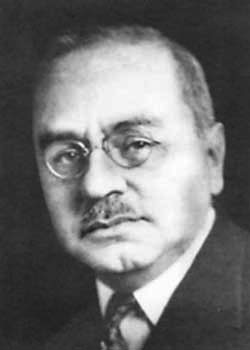
Recently someone mistook me for an Adlerian. This got me thinking, “Maybe I am an Adlerian?” Then again, if you look at the history of counseling and psychotherapy, most of us are Adlerians. At one presentation I attended back when we attended those things, the presenters started with, “In the beginning, there was Adler.”
As a Happy Birthday tribute to Alfred Adler, below is an excerpt from our Adlerian theories chapter. There’s much more, of course, like, for example, what Adlerian theory would have to say about the Super Bowl.
Happy Birthday Dr. Adler.
Historical Context
Freud and Adler met in 1902. According to Mosak and Maniacci (1999), Adler published a strong defense of Freud’s Interpretation of Dreams, and consequently Freud invited Adler over “on a Wednesday evening” for a discussion of psychological issues. “The Wednesday Night Meetings, as they became known, led to the development of the Psychoanalytic Society” (p. 3).
Adler was his own man with his own ideas before he met Freud. Prior to their meeting he’d published his first book, Healthbook for the Tailor’s Trade (Adler, 1898). In contrast to Freud, much of Adler’s medical practice was with the working poor. Early in his career, he worked extensively with tailors and circus performers.
In February 1911, Adler did the unthinkable (Bankart, 1997). As president of Vienna’s Psychoanalytic Society, he read a highly controversial paper, “The Masculine Protest,” at the group’s monthly meeting. It was at odds with Freudian theory. Instead of focusing on biological and psychological factors and their influence on excessively masculine behaviors in males and females, Adler emphasized culture and socialization (Carlson & Englar-Carlson, 2017). He claimed that women occupied a less privileged social and political position because of social coercion, not physical inferiority. Further, he noted that some women who reacted to this cultural situation by choosing to dress and act like men were suffering, not from penis envy, but from a social-psychological condition he referred to as the masculine protest. The masculine protest involved overvaluing masculinity to the point where it drove men and boys to give up and become passive or to engage in excessive aggressive behavior. In extreme cases, males who suffered from the masculine protest began dressing and acting like girls or women.
The Vienna Psychoanalytic Society members’ response to Adler was dramatic. Bankart (1997) described the scene:
After Adler’s address, the members of the society were in an uproar. There were pointed heckling and shouted abuse. Some were even threatening to come to blows. And then, almost majestically, Freud rose from his seat. He surveyed the room with his penetrating eyes. He told them there was no reason to brawl in the streets like uncivilized hooligans. The choice was simple. Either he or Dr. Adler would remain to guide the future of psychoanalysis. The choice was the members’ to make. He trusted them to do the right thing. (p. 130)
Freud likely anticipated the outcome. The group voted for Freud to lead them. Adler left the building quietly, joined by the Society’s vice president, William Stekel, and five other members. They moved their meeting to a local café and established the Society for Free Psychoanalytic Research. The Society soon changed its name to the Society for Individual Psychology. This group believed that social, familial, and cultural forces are dominant in shaping human behavior. Bankart (1997) summarized their perspective: “Their response to human problems was characteristically ethical and practical—an orientation that stood in dramatic contrast to the biological and theoretical focus of psychoanalysis” (p. 130).
Adler’s break from Freud gives an initial glimpse into his theoretical approach. Adler identified with common people. He was a feminist. These leanings reflect the influences of his upbringing and marriage. They reveal his compassion for the sick, oppressed, and downtrodden. Before examining Adlerian theoretical principles, let’s note what he had to say about gender politics well over 90 years ago:
All our institutions, our traditional attitudes, our laws, our morals, our customs, give evidence of the fact that they are determined and maintained by privileged males for the glory of male domination. (Adler, 1927, p. 123)
Raissa Epstein may have had a few discussions with her husband, exerting substantial influence on his thinking (Santiago-Valles, 2009).
***********
You can take a peek at our Theories text on Amazon: https://www.amazon.com/Counseling-Psychotherapy-Theories-Context-Practice/dp/1119473314/ref=sr_1_1?crid=LIAVFMJLE5TD&dchild=1&keywords=sommers-flanagan&qid=1612716309&s=books&sprefix=sommers-%2Caps%2C205&sr=1-1
 John Sommers-Flanagan
Very informative… 🙌🏼
Thanks very much!